
One of the biggest challenges for string players is the concept of bow arm weight in relation to sound production — and with it, the challenge of feeling a sense of balance in the hand as that weight transfers from the back and arm through to the bow and string. So many players approach the string by simply bringing the bow up to it and hoping for a nice, round sound. But approaching the string from below, without any preparation or momentum, makes about as much sense as trying to jump in the air without first bending the knees.
The Jumping Analogy
Try this in your practice room: first, jump in the air doing whatever comes naturally. Easy, right? Now try again — but this time, do not allow the knees to bend at all. Notice how awkward and effortful jumping feels without any spring or momentum to draw from.
The same principle applies to sound production. When a player simply brings the bow to the string without any preparation — without elevating the arm first to allow it to drop with weight — they are essentially limited to pressing the bow into the string using muscular force. This is tiring, inefficient, and produces a pressed, constricted tone rather than a free, resonant one.
Arm Circles: Accessing Range of Motion
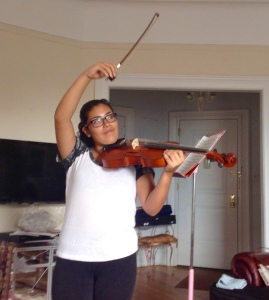
Range of motion: large circular arm movements to feel and access bow arm weight.
While no one would ask a student to make huge arm circles in performance, practicing them in the lesson or practice room is an invaluable way to become acquainted with the full range of movement available — and to feel what it is like to let the arm drop with genuine weight.
The body has a wonderful way of accessing physical memories at the crucial moment through kinesthetic learning. Under pressure — in a performance or audition — many players tend to physically shut down, moving less than they would in the practice room. That is precisely why it is a good idea to exaggerate certain movements in practice: so that when the pressure is on, the player has a larger reservoir of physical memory to draw from and is less afraid to move enough.
What goes up must come down — and thanks to gravity, that is always true. The goal is to elevate the arm sufficiently so that it can drop onto the string with natural weight rather than being pressed down with muscular effort. Over time, this exaggerated range of motion becomes refined and internalized, until the arm’s circular preparation may not be visible at all — but the weight and freedom it produces remain.
Open Strings and Arm Weight: Karen Tuttle’s Approach
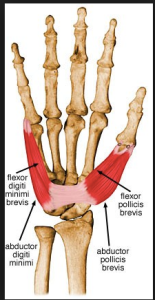
The bones and muscles of the hand — understanding the Digiti Dorsi and their role in bow balance.
Karen Tuttle was always a strong proponent of practicing on open strings as a way of training the body to utilize arm weight for sound production. It can feel disconcerting at first — once a player begins to access genuine arm weight, there is a temptation to hold back, afraid of crashing down on the string and producing an ugly sound.
But try not to be too afraid of ugly sounds while the body is learning. A combination of factors will refine the sound over time: bow speed, placement on the string in relation to the bridge, and — crucially — the fingers of the bow hand learning to act as shock absorbers, distributing and balancing the weight as it shifts from the pinky to the index finger throughout the bow stroke.
Feeling the Balance: The Pinky and the Teeter-Totter
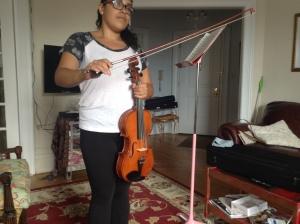
Rudimentary balance from the base of the pinky — noticing the shock absorber quality needed to distribute bow arm weight, particularly on down bows.
Feeling the balance in the right hand as the arm weight arrives at the string is one of the biggest stumbling blocks for players. On a down bow, the pinky bears the brunt of the weight — acting as a shock absorber and counterbalance. On an up bow from the tip, the weight shifts palpably to the index finger. This teeter-totter relationship is constant and requires a bow hand that is responsive and alive, not gripped or static.
A simple motion study to feel this balance and begin strengthening the pinky muscles involved (particularly the Abductor Digiti):
- Take a bow hold, but instead of placing the pinky on top of the bow, allow the bow to rest at the base of the pinky knuckle and palm.
- Allow the bow to teeter-totter between the base of the pinky and the index finger, noticing how the weight shifts from one end to the other.
- Gradually refine the balance, feeling how the pinky and index finger work together to keep the bow stable and responsive.
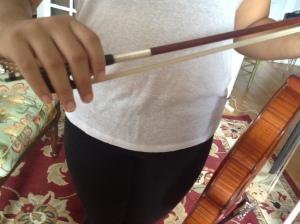
The teeter-totter motion study — feeling the shift of bow arm weight between the pinky and index finger.
This study builds both awareness and strength. Over time, the hand learns to balance the bow naturally and responsively — and the arm’s weight flows freely through the bow and into the string, producing the kind of rich, singing tone that no amount of pressing can achieve.
by Rozanna Weinberger
0 comments